

4 min read
Court Ruling on Jefferson County Courthouse Slip and Fall Case

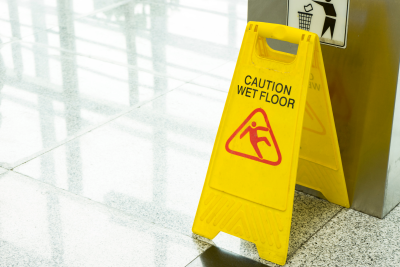
In March 2019, Krista Dozier slipped and fell on a puddle of water inside the Jefferson County courthouse. The water was located in a hallway and was not marked by any warning sign at the time of the fall. A county employee noticed the puddle and contacted facilities management to request cleanup. Before the water was removed or any warning was placed, the fall occurred.
The courthouse qualified as a public building. The presence of water on the floor formed the factual basis for later claims that the condition posed a risk to the safety of members of the public using the building.
Filing of the Lawsuit and District Court Proceedings
In 2021, Krista Dozier filed a civil action against Jefferson County. The filing included claims based on premises liability and negligence. Jefferson County responded by filing a motion to dismiss for lack of subject matter jurisdiction. The county relied on the Colorado Governmental Immunity Act, which generally provided public entities with immunity from tort claims unless a statutory waiver applied.
The county asserted that the puddle did not meet the statutory definition of a dangerous condition of a public building. Under the statute, a dangerous condition required proof that a physical condition created an unreasonable risk to public safety, that the condition was known or should have been known through reasonable care, and that the condition was proximately caused by a negligent act or omission of the public entity in maintaining the facility.
A factual dispute developed regarding how long the county had notice of the puddle before the fall occurred. Jefferson County maintained that less than five minutes elapsed between the employee becoming aware of the water and the fall. Dozier asserted that the puddle had been known to county employees for closer to twenty minutes.
Because the jurisdictional facts were disputed, the district court held an evidentiary hearing to resolve the timing issue. Testimony showed that a county employee learned of the puddle shortly after noon, contacted facilities management, received confirmation of the request within minutes, and then encountered Dozier on the floor moments later. Based on the evidence presented, the district court found that only a few minutes had passed between notice and the fall.
After making factual findings, the district court concluded that Jefferson County did not have a reasonable amount of time to warn of or correct the condition. The court determined that the county’s response was reasonable under the circumstances and that the puddle was not a dangerous condition as defined by statute. The case was dismissed for lack of subject matter jurisdiction.
Court of Appeals Decision
A division of the Colorado Court of Appeals reversed the district court’s dismissal. The division concluded that the reasonableness of Jefferson County’s response was not relevant to the jurisdictional analysis. It treated the county’s conduct as an issue going to the merits of liability rather than to immunity.
The division relied on allegations in the complaint to find a minimal causal connection between the puddle and the injuries. Based on that approach, the division determined that the dangerous condition exception applied and that Jefferson County had waived immunity. The case was allowed to proceed.
Supreme Court Review and Legal Framework
The Colorado Supreme Court granted review to address two issues. The first issue concerned the proper burden of proof when jurisdictional facts were disputed and intertwined with the merits of the claim. The second issue concerned whether proof of proximate cause was required to establish a dangerous condition under the Colorado Governmental Immunity Act.
The Supreme Court reviewed the statutory framework governing public entity immunity. The Act generally immunized public entities from tort claims, with specific exceptions. One exception applied when injuries resulted from a dangerous condition of a public building.
The statutory definition of a dangerous condition required proof that a physical condition created an unreasonable risk to public safety, that the condition was known or should have been known through reasonable care, and that the condition was proximately caused by a negligent act or omission in constructing or maintaining the facility. Prior case law treated these elements as a multi factor test.
The Court also addressed the proper evidentiary burden when jurisdictional facts overlapped with the merits of a claim. The Court rejected a purely minimal or prima facie standard and also declined to require proof by a preponderance of the evidence at the jurisdictional stage. Instead, it adopted a likelihood standard. Under this standard, the individual bringing the claim had to show that it was likely the public entity’s negligent act or omission caused the alleged dangerous condition.
Application to the Courthouse Spill
Applying this framework, the Supreme Court concluded that the disputed facts concerning notice and response time were inextricably intertwined with the merits of the premises liability claim. Whether Jefferson County acted negligently depended on whether it had a reasonable opportunity to discover and correct the condition before the fall occurred.
The Court determined that the statutory definition of a dangerous condition required proof of proximate cause. The mere presence of water on the floor did not, by itself, establish a dangerous condition. Dozier had to show that the condition existed because of a negligent act or omission by the public entity.
The Court reviewed the district court’s factual findings and concluded that they were supported by the record. Testimony established a short time frame between notice of the puddle and the fall. There was no evidence establishing when another employee may have learned of the spill. Based on these findings, the Supreme Court concluded that Jefferson County did not have a reasonable amount of time to warn of or correct the condition.
Because the county’s response was found to be reasonable, the Court concluded that the failure to act was not negligent under the circumstances. As a result, the puddle did not qualify as a dangerous condition within the meaning of the Act.
Final Ruling
The Colorado Supreme Court reversed the judgment of the court of appeals. The district court’s order dismissing the complaint for lack of subject matter jurisdiction was reinstated. The Court concluded that the individual bringing the claim failed to establish a likelihood that Jefferson County’s actions or omissions proximately caused a dangerous condition of a public building.
Premises Liability Legal Services
If you were injured due to an unsafe condition on someone else’s property, Whitcomb, Selinsky PC handles cases involving premises liability claims arising from hazardous property conditions. Contact us to discuss your situation with our team.